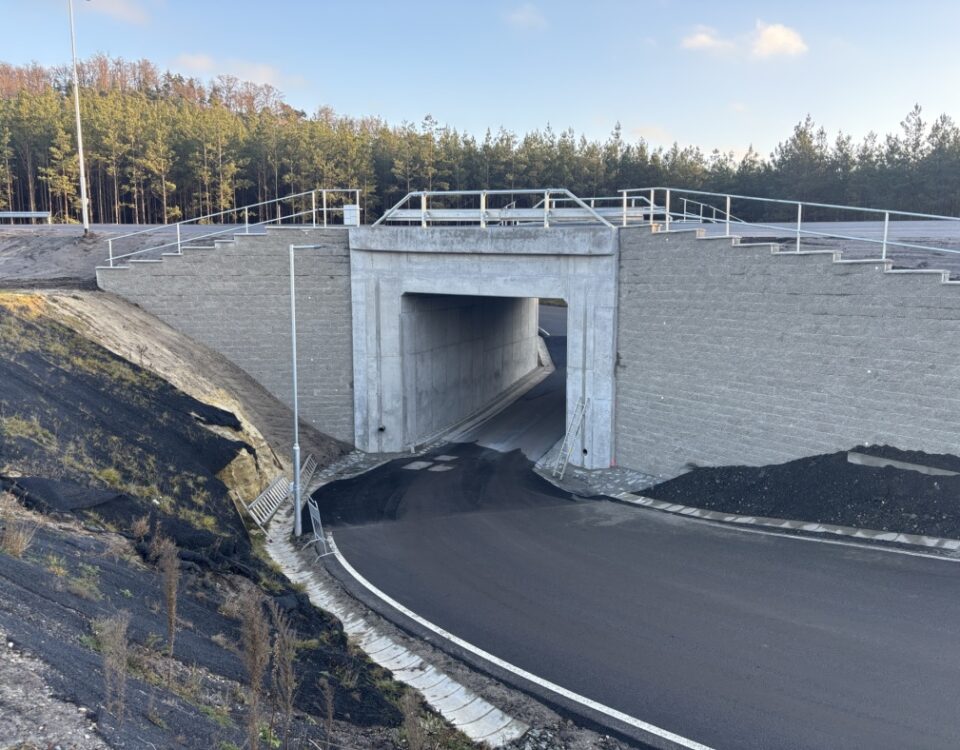
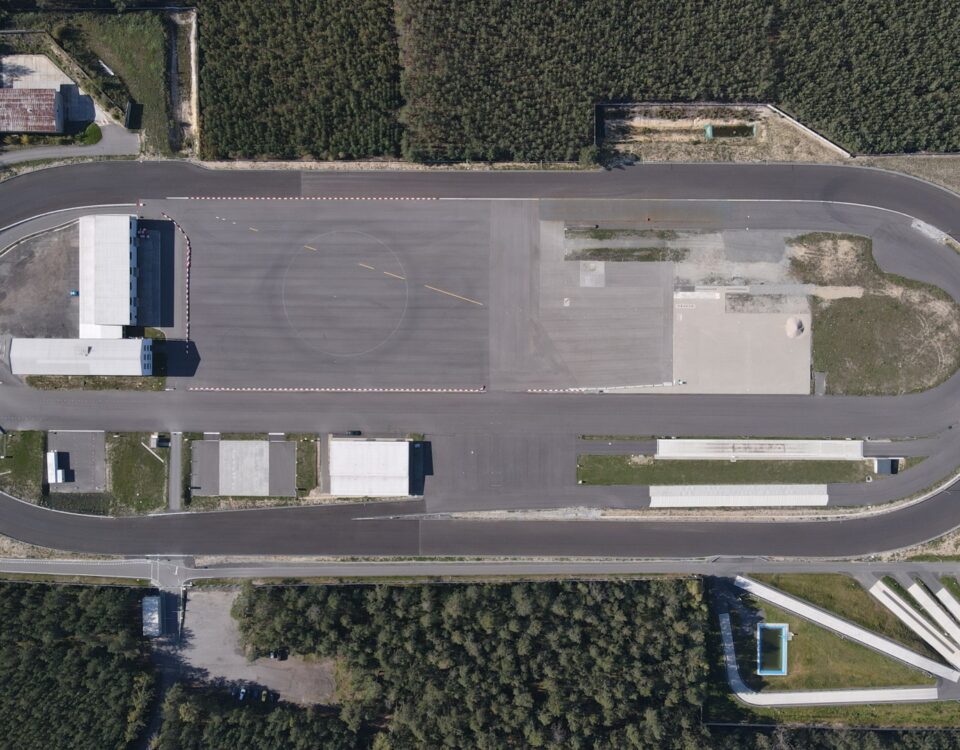
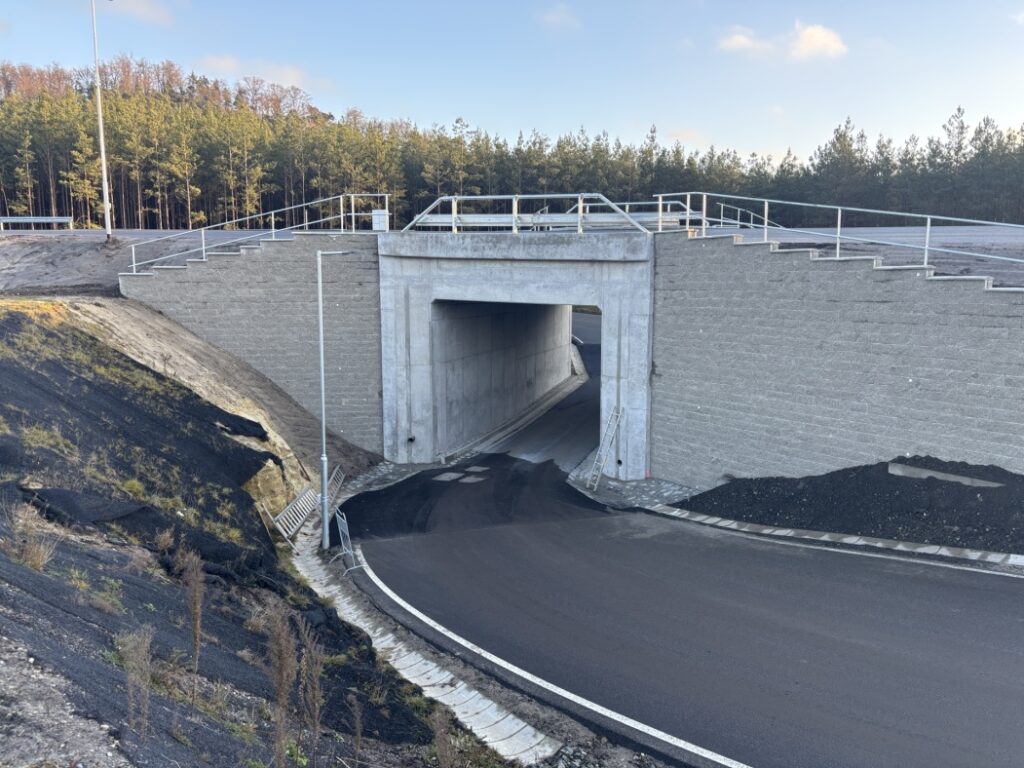
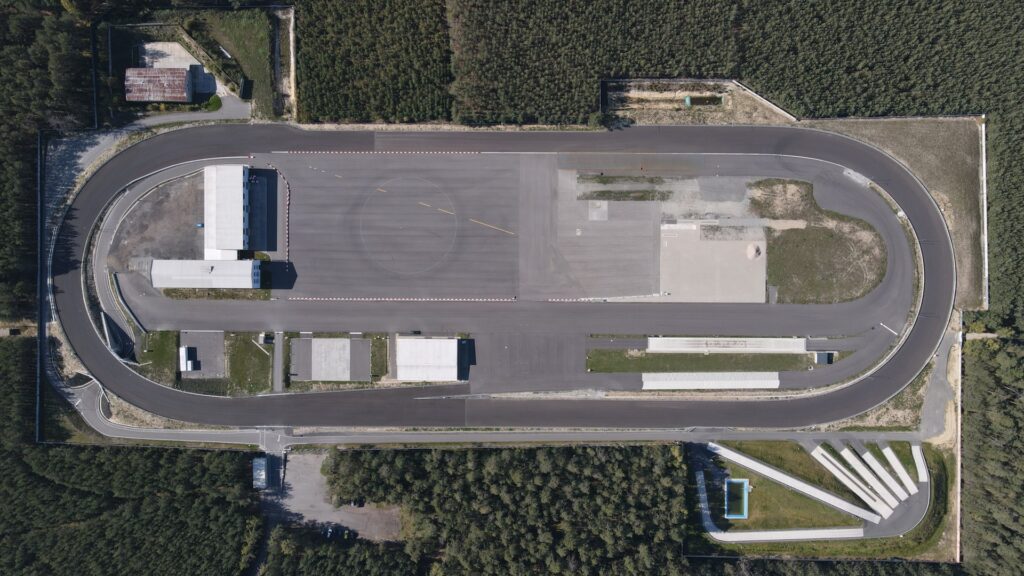
All it takes is a sudden heavy downpour, and an ordinary road can quickly turn into a stream of water. For drivers, it’s a challenging situation; for automotive developers, it’s a scenario vehicle must be prepared for. This is exactly what simulations at the AUREL Proving Ground in Břehyně near Doksy are designed for. One of the key features of the facility is a dedicated water channel, which enables testing vehicle behaviour during water fording under controlled conditions.
80 metres for hundreds of test scenarios
The water channel at the AUREL Proving Ground is 80 metres long and allows testing at depths of up to 55 centimetres. Thanks to its connection to test tracks, vehicles can enter the channel at various speeds – including very high ones. This allows developers to simulate situations commonly experienced on real roads. Different test scenarios help verify whether a vehicle’s design can safely handle contact with water. To ensure results are repeatable and comparable, full control over the test environment is essential.
Water fully under control
The water channel is designed to provide stable and precisely adjustable conditions that can be repeated multiple times if needed. It is filled from below using high-capacity pumps connected to underground reservoirs, allowing quick regulation of water levels depending on the test requirements.
A calm water surface also plays a crucial role. If the water were turbulent or flowing, each test run would take place under different conditions. A still surface ensures that every pass starts from the same baseline, making results comparable. It also clearly shows how water behaves around the bumper, wheels, or air intake, which is important for potential design adjustments.

What is tested during water fording
For each vehicle model, manufacturers determine in advance the maximum water depth the vehicle can safely pass through. Testing in the water channel at the AUREL Polygon then verifies that the vehicle can truly handle this limit without damage to critical systems.
During testing, developers monitor a wide range of details. They focus, for example, on how water behaves around the bumper and underbody during the passage, whether it enters the engine air intake or reaches sensitive electronic components. In modern vehicles, the protection of wiring, connectors, and other parts also plays a major role, as these must remain reliably sealed even when exposed to water.
The water channel is therefore used for several types of tests. These include, for example, fording tests, in which the vehicle passes through water of a defined depth, air intake testing, and evaluation of bumper design and other components at both the front and rear of the vehicle. Testing also focuses on how the vehicle behaves at different speeds and how water flows around the wheels and underbody.
Facilities directly at the test track
Testing at the proving ground often takes place in intensive blocks, where developers need to quickly analyse data and prepare subsequent runs. For this reason, a dedicated shelter, power supply, and worktables are available directly next to the water channel. This allows teams to work efficiently on-site and speeds up the entire testing process.
Preparation for unpredictable situations
The water channel at the AUREL Polygon allows automotive manufacturers to simulate situations that occur unexpectedly on the road and often without warning. These may include flooded road sections after heavy rainfall, deep puddles on rural roads, or water accumulated in underpasses. In the controlled environment of the proving ground, these scenarios can be repeatedly simulated, allowing engineers to monitor vehicle behaviour and verify that all critical systems function exactly as intended. This makes it easier to identify potential risks that could lead to system failures or vehicle damage in real-world conditions.
Planning validation testing for your prototypes? Contact us. We will be happy to discuss the technical specifications of your testing scenarios with you.